



Epigenetic Reader Domain
Epigenetic regulators of gene expression and chromatin state include so-called writers, erasers, and readers of chromatin modifications.Well-characterized examples of reader domains include bromodomains typically binding acetyllysine and chromatin organization modifier (chromo), malignant brain tumor (MBT), plant homeodomain (PHD), and Tudor domains generally associating with methyllysine. Research on epigenetic readers has been tremendously influenced by the discovery of selective inhibitors targeting the bromodomain and extraterminal motif (BET) family of acetyl-lysine readers. The human genome encodes 46 proteins containing 61 bromodomains clustered into eight families. Distinct experimental approaches are used to identify the first BET inhibitors, GSK 525762A and (+)-JQ-1.
The Polycomb group (PcG) protein, enhancer of zeste homologue 2 (EZH2), has an essential role in promoting histone H3 lysine 27 trimethylation (H3K27me3) and epigenetic gene silencing. This function of EZH2 is important for cell proliferation and inhibition of cell differentiation, and is implicated in cancer progression. Cyclin-dependent kinases regulate epigenetic gene silencing through phosphorylation of EZH2. In many types of cancers including lymphomas and leukemia, EZH2 is postulated to exert its oncogenic effects via aberrant histone and DNA methylation, causing silencing of tumor suppressor genes.
p300/CBP is not only a transcriptional adaptor but also a histone acetyltransferase.
Epigenetic Reader Domain Isoform Specific Products
-
Epigenetic Reader Domain
(434)
View all products
-
Brd
(3)
View all products
-
BRPF1
(9)
View all products
-
BRPF2
(5)
View all products
-
BRPF3
(2)
View all products
-
BRD2
(66)
View all products
-
BRD3
(62)
View all products
-
BRD4
(298)
View all products
-
BRDT
(26)
View all products
-
CECR2
(4)
View all products
-
BD1
(9)
View all products
-
BD2
(9)
View all products
-
BRD7
(9)
View all products
-
BRD9
(55)
View all products
-
BET
(22)
View all products
-
BAZ
(1)
View all products
All Product Categories
-
Epigenetic Reader Domain Inhibitors
(583)
View all products
-
Epigenetic Reader Domain Agonists
(3)
View all products
-
Epigenetic Reader Domain Antagonists
(2)
View all products
-
Epigenetic Reader Domain Activators
(11)
View all products
-
Epigenetic Reader Domain Modulators
(3)
View all products
-
Epigenetic Reader Domain Chemicals
(2)
View all products
-
Epigenetic Reader Domain Inducer
(1)
View all products
-
Epigenetic Reader Domain Degraders
(165)
View all products
-
Epigenetic Reader Domain Controls
(12)
View all products
-
Epigenetic Reader Domain Substrate
(1)
View all products
-
Epigenetic Reader Domain Ligands
(28)
View all products
-
Epigenetic Reader Domain Related Products (888)
Related Products (888)

-
Antibodies (109)
-
Epigenetic Reader Domain Isoform Comparison
-
BRD4 Inhibitor-17
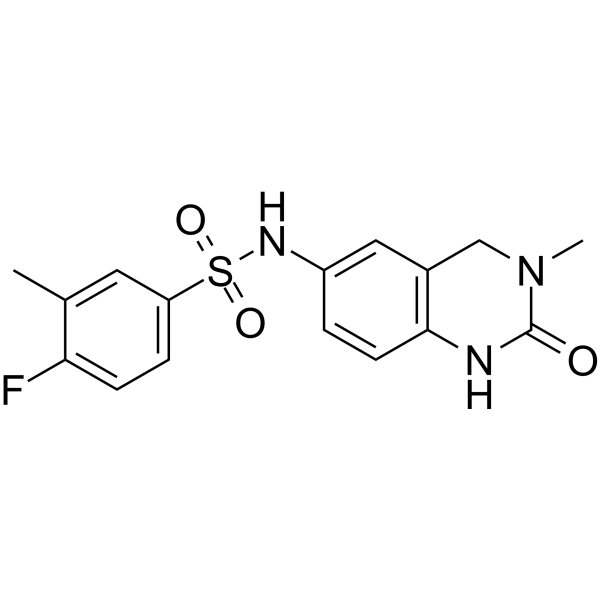 0 ImagesCat. No.: HY-145909CAS No.: 2835555-10-5
-
PROTAC BRD4 ligand-1-NH-PEG-phenol-PEG-COOtBu
 0 ImagesCat. No.: HY-176369CAS No.: 2973054-19-0
-
MM-02-08
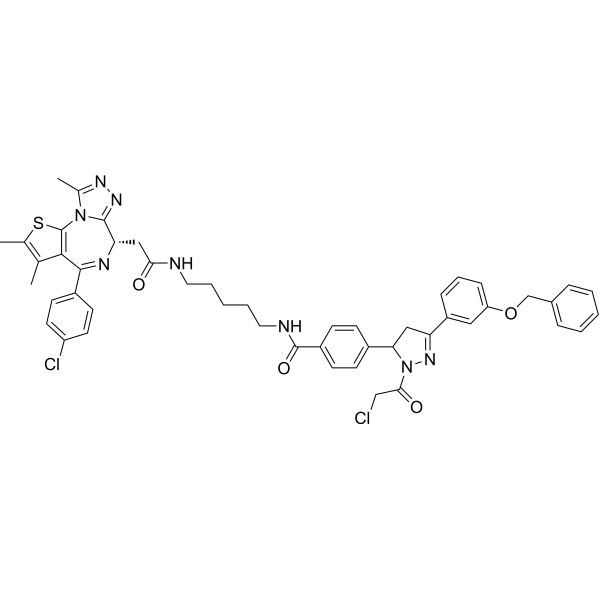 0 ImagesCat. No.: HY-161167MM-02-08 is a BRD4 PROTAC degrader with a DC50 of approximately 10 nM. MM-02-08 mediates mono-ubiquitination and poly-ubiquitination modifications of target proteins without impairing cell viability. MM-02-08 is applicable to related research on triple-negative breast cancer, prostate cancer, and other diseases.
-
BET-IN-12
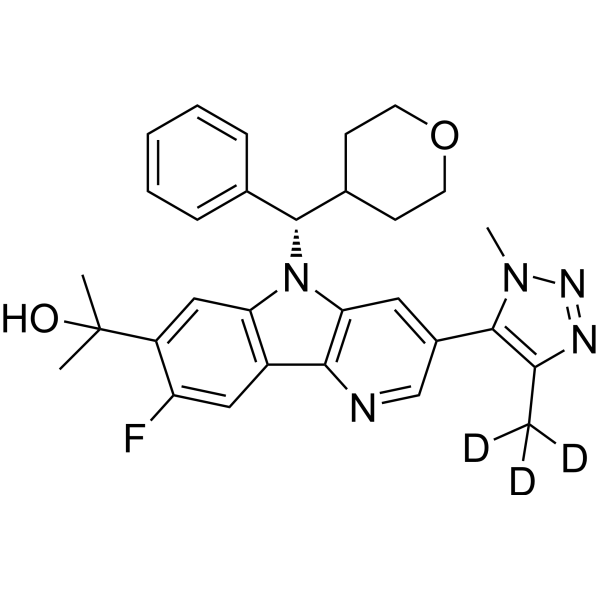 0 ImagesCat. No.: HY-150516SCAS No.: 1800343-11-6
-
PROTAC BRD2 BD1 Degrader-1
 0 ImagesCat. No.: HY-175678PROTAC BRD2 BD1 Degrader-1 is a potent and selective BRD2 BD1 PROTAC degrader, with a DC50 of 65 nM, an EC50 of 423 nM, and a Kd of 69 nM against BRD2 BD1. PROTAC BRD2 BD1 Degrader-1 induces the formation of a ternary complex between the BET bromodomain and the VHL E3 ubiquitin ligase complex, triggering VCB-dependent degradation of the target bromodomain. PROTAC BRD2 BD1 Degrader-1 can be used in cancer research.
-
PROTAC BET Degrader-16
 0 ImagesCat. No.: HY-181867CAS No.: 2410947-65-6PROTAC BET Degrader-16 (Compound A10) is a BET PROTAC degrader with a DC50 of 0.31 nM against BRD4, and it preferentially targets BRD4 over other BET family members. PROTAC BET Degrader-16 degrades BRD2, BRD3 and BRD4 via the ubiquitin-proteasome system, a process that requires target binding and recruitment of the CRBN E3 ligase. PROTAC BET Degrader-16 induces cell cycle arrest and promotes apoptosis. PROTAC BET Degrader-16 exerts anti-tumor activity against acute myeloid leukemia.

-
WNY0824
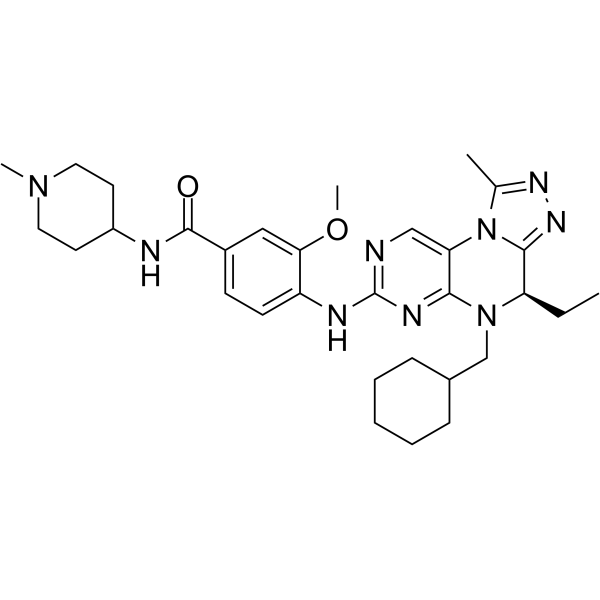 0 ImagesCat. No.: HY-143471CAS No.: 2412707-81-2Synonyms: PLK1/BRD4-IN-1WNY0824 (PLK1/BRD4-IN-1) is an orally active dual inhibitor of PLK1 and BET protein families, with IC50 values of 22, 402.5, 150.7, 103.9, and 311.9 nmol/L for PLK1, BRD2, BRD3, BRD4, and BRDT, respectively. WNY0824 induces cell cycle arrest and apoptosis by inhibiting AR- and MYC-mediated transcriptional processes. In addition, WNY0824 also inhibits tumor growth in Enzalutamide (HY-70002) resistant CRPC xenograft tumor models.
-
CBP/p300/BRD4 ligand-1
 0 ImagesCat. No.: HY-181759CAS No.: 3086024-48-5CBP/p300/BRD4 ligand-1 is a small-molecule inhibitor targeting CBP, p300, and BRD4. CBP/p300/BRD4 ligand-1 competitively binds to the functional domains of target proteins without disrupting key interactions. CBP/p300/BRD4 ligand-1 can be used for the construction of dual-target PROTAC degraders (HY-181758) in studies related to prostate cancer and other cancers.
-
JV8
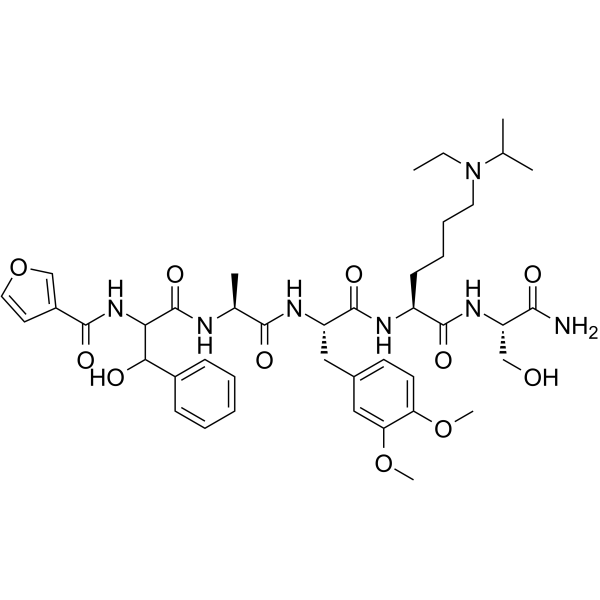
 0 ImagesCat. No.: HY-173433CAS No.: 2841716-61-6JV8 is a BRD4 PROTAC degrader with a target Kd of 0.65 μM. JV8 preferentially induces BRD4 degradation in the cytoplasm via the ubiquitin-proteasome system. JV8 exhibits dose-dependent and time-dependent BRD4 degradation activity and is capable of inducing cell apoptosis. JV8 inhibits tumor growth in a dose-dependent manner and induces BRD4 degradation in tumor tissues in vivo. JV8 can be used in research related to various cancers such as breast cancer and pancreatic cancer.
-
TMU454
 0 ImagesCat. No.: HY-180909TMU454 is a prototype GalNAc-PROTAC conjugate. TMU454 binds to ASGPR on the membrane of cells, and then is internalized via ASGPR-mediated endocytosis. TMU454 selectively degrades BRD4. TMU454 exhibits anticancer activity against hepatocellular carcinoma.
-
PROTAC BET Degrader-15
 0 ImagesCat. No.: HY-181729PROTAC BET Degrader-15 is a BET PROTAC degrader with DC50 values of <0.10 nM, <0.01 nM, and <0.01 nM against BRD2, BRD3, and BRD4, respectively. PROTAC BET Degrader-15 induces significant G2/M phase cell cycle arrest and triggers apoptosis. PROTAC BET Degrader-15 causes marked downregulation of c-Myc, accompanied by upregulation of the cell cycle inhibitory protein p21, downregulation of CDK6, and an increase in the apoptosis marker cleaved PARP. PROTAC BET Degrader-15 is applicable to the research of hematologic malignancies and lung cancer.

-
LCI40
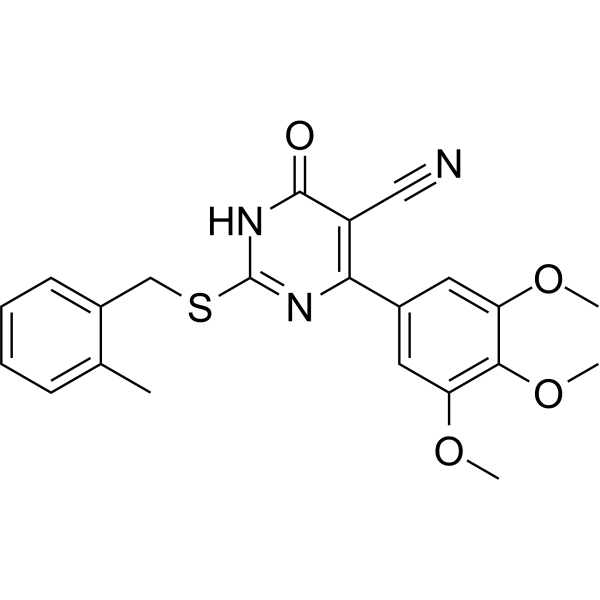
 0 ImagesCat. No.: HY-183770LCI40 is an orally active dual PI3K/BRD4 inhibitor (PI3Kα IC50 = 0.071 μM, PI3Kβ IC50 = 0.17 μM, PI3Kγ IC50 = 0.66 μM, PI3Kδ IC50 = 0.072 μM, BRD4 BD1 IC50 = 0.19 μM, and BRD4 BD2 IC50 = 1.88 μM. LCI40 inhibits phosphorylation of pAKT (S473) and suppresses c-MYC levels in mantle cell lymphoma cells. LCI40 displays immunomodulatory capacity with minimal toxicity to normal mouse immune cells. LCI40 can be used for the research of mantle cell lymphoma.

-
PROTAC BRD4 Degrader-31
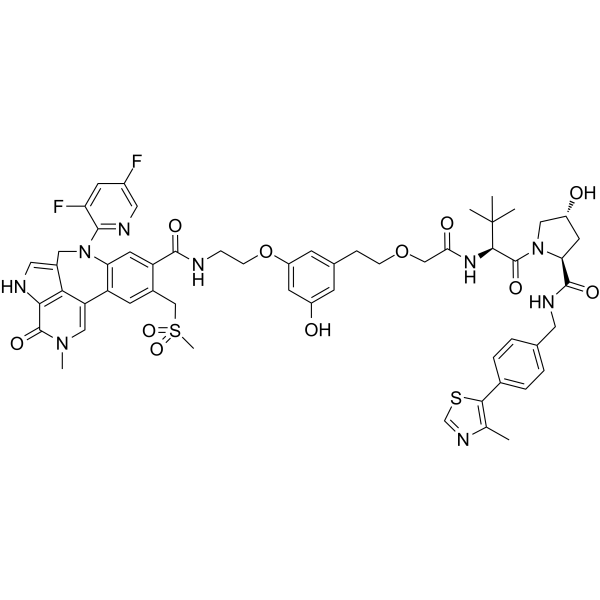
 0 ImagesCat. No.: HY-174210PROTAC BRD4 Degrader-3 is a potent BRD4 PROTAC degrader with DC50 values of 164 nM and 80 nM at 4 h and 24 h, respectively. PROTAC BRD4 Degrader-3 induces the ubiquitination and subsequent proteasomal degradation of BRD4 by recruiting the ubiquitin E3 ligase KLHDC2. PROTAC BRD4 Degrader-3 can be used in breast cancer research.
-
I-BET432
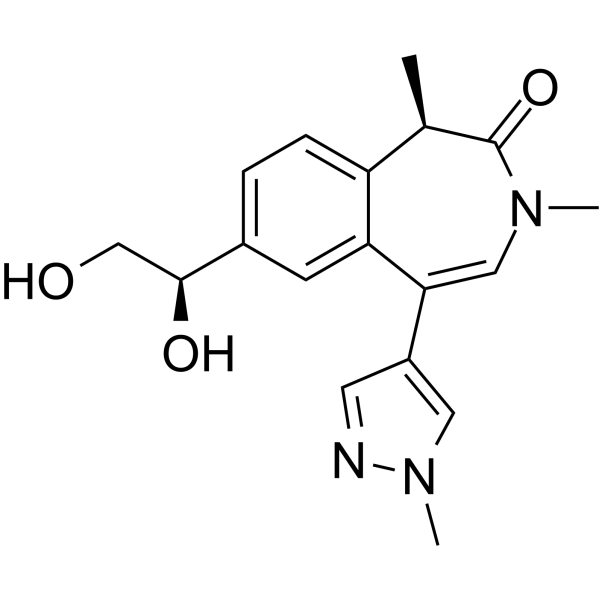 0 ImagesCat. No.: HY-151894CAS No.: 3035187-74-4




